
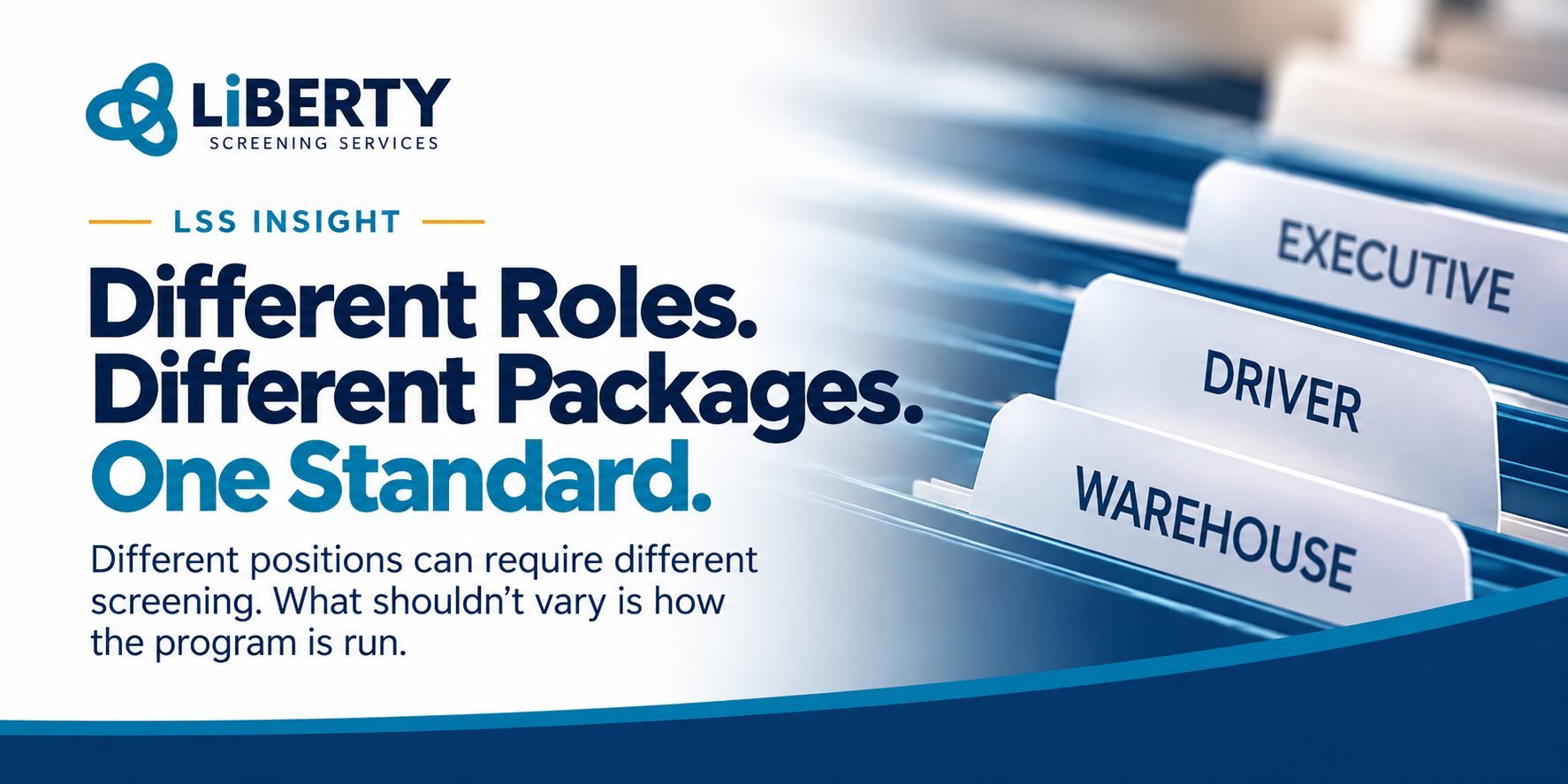
Different Roles. Different Packages. One Standard.
Different positions can require different screening. What shouldn't vary is how the program is run.
A warehouse associate. A delivery driver. A regional manager.
Should they all go through the same background check? Not necessarily. Different positions can require different screening components. What should stay consistent is how the organization sets those requirements, applies them, and stands behind them.
The goal isn't identical screening for every role. It's an accountable program that makes role-based requirements clear before a candidate ever enters the process.
Two Roles, Two Packages
Consider an illustrative example. One candidate has been offered a warehouse role. Another has been offered a role driving a company vehicle.
The driver's package includes a motor vehicle record check. The warehouse package doesn't need one. That difference is easy to explain because it is tied to what each job involves and was set before either candidate applied.
The hard part isn't drawing that distinction once. It's keeping it intact as hiring spreads across departments, locations, and hiring managers.
From Choosing Components to Running the Program
In More Screening Isn't Always Better, we looked at choosing the right screening components for a role. This piece is about what comes next: keeping those requirements consistent once they're in place.
Role-based differences belong in package design. They are defined in advance, tied to the position's responsibilities, and documented with the reason behind them.
They don't belong in day-to-day exceptions. A hiring manager adds a search for one candidate. A location skips a component to save time. A package gets chosen by whoever happens to place the order. Each of those can seem minor. Together, they mean two candidates for the same role may go through two different processes.
Where Consistency Matters
A consistent program usually rests on four things:
- Documented requirements. Each position has a defined package and a recorded reason for it.
- Centralized policy. Requirements are set at the organizational level, not reinvented by each location or department.
- Uniform administration. Candidates for comparable roles follow the same established screening process, with disclosures, authorizations, and other requirements adjusted as applicable law requires.
- Clear review procedures. Defined responsibility for reviewing results, addressing disputes, and following the adverse action steps that apply.
As we wrote in Operational Consistency Is the Foundation of Compliance, consistency means comparable cases follow the same documented process. In a screening program, comparable cases start with comparable roles.
A few questions worth asking about your own program:
- Is every position mapped to a defined package, with the reason written down?
- Can a hiring manager or location change a package without approval?
- Do candidates for comparable roles go through the same process at every location?
- When a role's responsibilities change, who updates its screening requirements?
Where a Screening Partner Fits
An employer establishes its screening policy. A screening partner can help translate those requirements into a consistent, repeatable process:
- Role-based package design, so each position is screened for what the job actually involves.
- Accurate, correctly matched records, so the information in front of the employer belongs to the right person.
- Clear reporting, so reviewers can see what each result is, where it came from, and when it occurred.
- Reinvestigation when a candidate disputes the accuracy of what was reported, which is the screening company's responsibility.
- Process support and documentation, helping employers understand the information provided, navigate screening-related steps, and maintain visibility into the process.
One Standard of Accountability
Different positions may require different screening packages. That doesn't mean employers need different approaches to managing the screening process.
A consistent program establishes screening requirements in advance, documents the reasons for those requirements, and applies them uniformly to candidates being considered for comparable roles.
It also establishes clear responsibilities for reviewing findings, addressing disputes, and following applicable adverse action procedures.
At Liberty Screening Services, we believe responsible screening begins with understanding what each position requires and building a program that supports accuracy, consistency, and accountability across the organization.
Because consistency doesn't mean every background check looks the same. It means every screening requirement is supported by a process employers can explain.
about
liberty screening
Liberty has a proven record of providing employers with cost effective, timely, and accurate applicant screening solutions. Based in the United States, Liberty’s customer service is unparalleled.
Business License Number: A24118201
